Work
Things I've built. Each page covers the method, the results and the limitations.
-
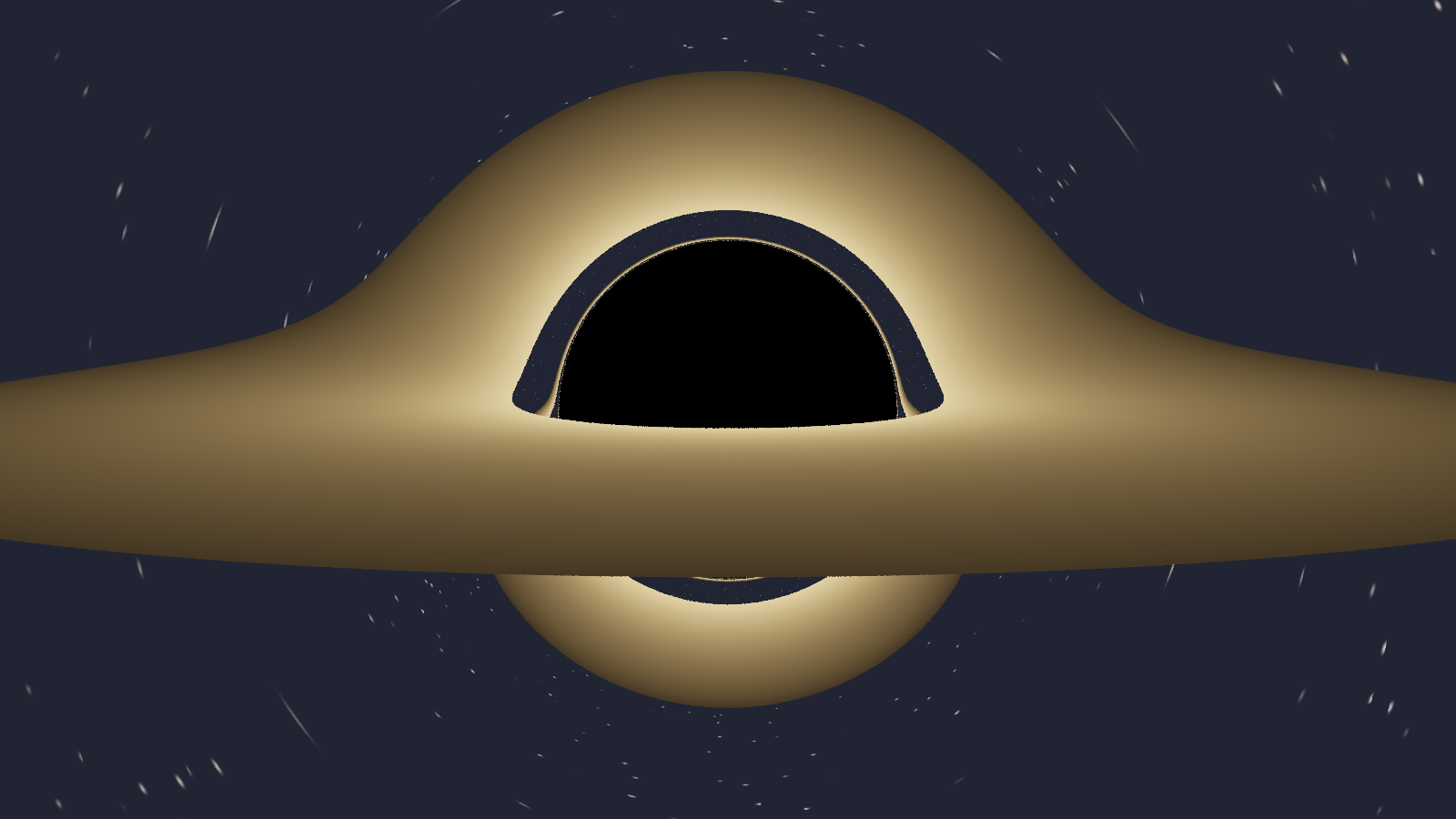
Fig. 1 Render from v0.1. The arc above the shadow is the far side of the disk, bent over the top by the hole; the glow beneath it is light that looped underneath. 01 · Rust · activegargantua-rs
Ray tracer for light around a Schwarzschild black hole. No physics libraries.
result Rays with impact parameter below b = (3√3/2) rₛ ≈ 2.598 rₛ are captured — the shadow size the theory predicts, checked in the test suite.
-
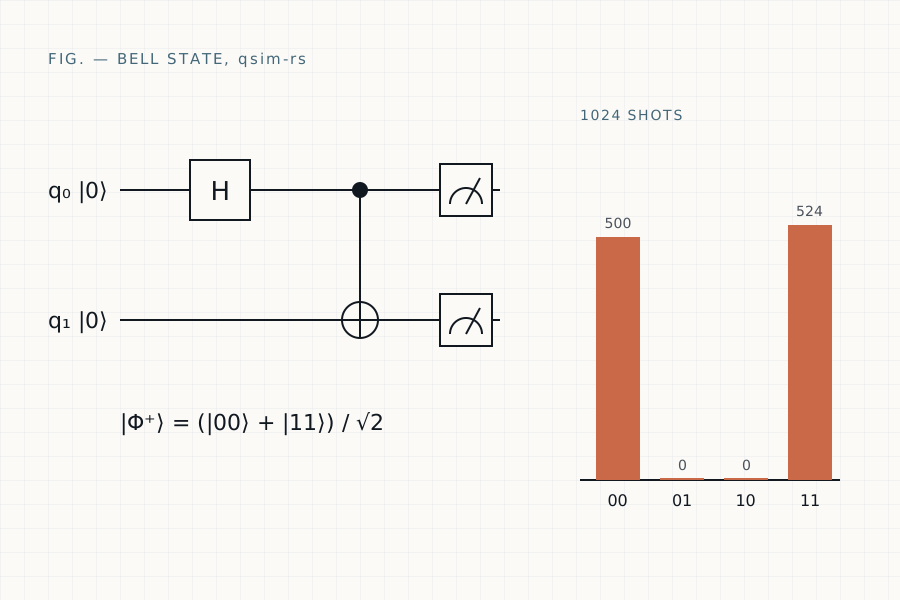
Fig. 2 The Bell-state example. Over 1024 shots only 00 and 11 appear — the two qubits are perfectly correlated. 02 · Rust · activeqsim-rs
State-vector quantum circuit simulator written from scratch, without a quantum SDK.
result Tests check physics, not code paths — unitarity of every gate, H² = I, HZH = X, Bell and GHZ correlations, and an 80k-shot histogram flat within 4σ.
-
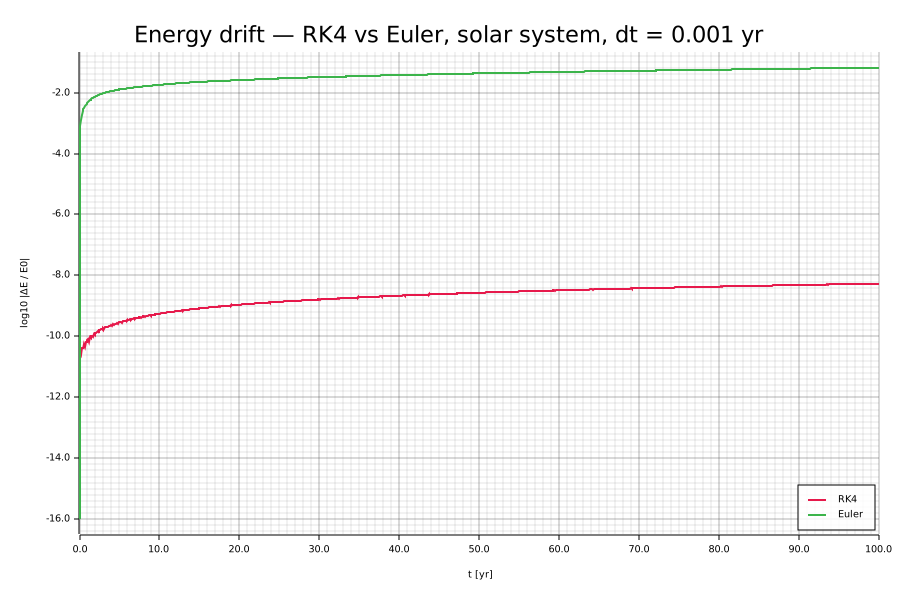
Fig. 3 Relative energy error for the full solar system over 100 years at dt = 0.001 yr. Same step, same forces — only the integrator changes. 03 · Rust · finishednbody-sim
N-body gravity simulation with RK4 and parallel force calculation, checked against Kepler's laws.
result RK4 energy drift of 5.4×10⁻⁹ over a 100-year solar-system run, against 6.5×10⁻² for Euler — seven orders of magnitude at the same time step.
-
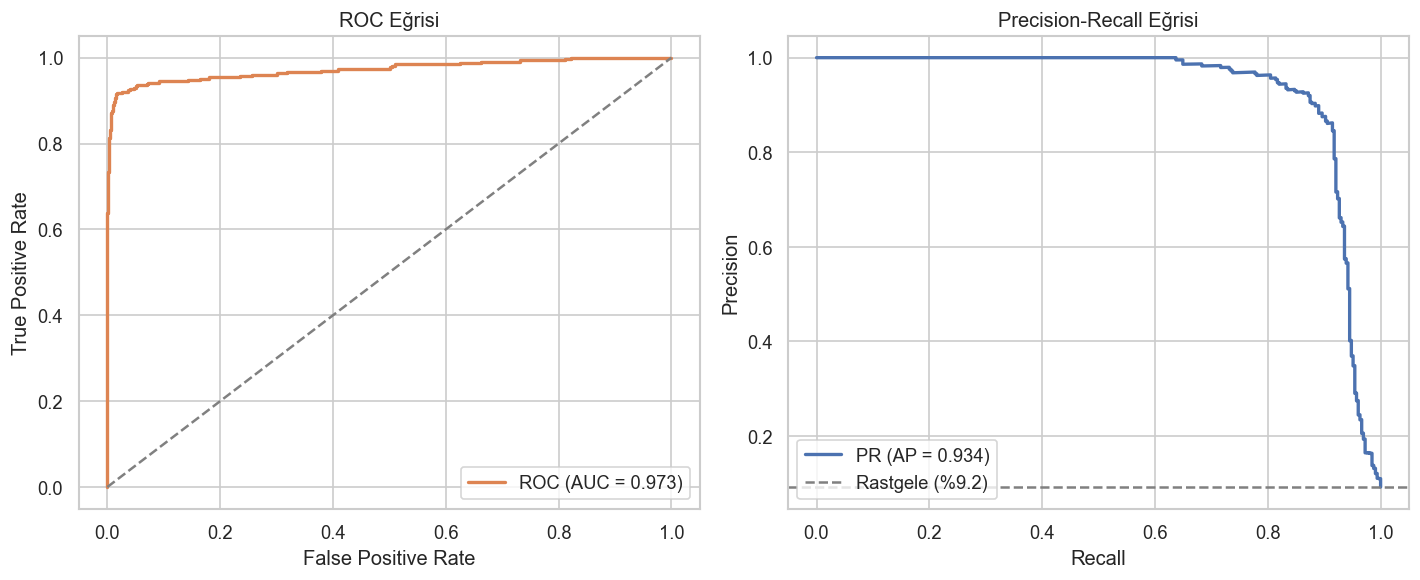
Fig. 4 ROC and precision–recall curves on the held-out test set. With 9% positives, the precision–recall curve is the honest one. 04 · Python · finishedFinding pulsars in noise
Classifying HTRU2 radio candidates as pulsars or noise, where only 9% of the data are real pulsars.
result Logistic regression recovers 92% of the real pulsars in the test set (recall 0.92, PR-AUC 0.934) — on data where predicting "no pulsar" every time would already score 91% accuracy.
Side projects
-
clap-trigger
A small desktop assistant triggered by a double clap — spoken status report and project shortcuts.